
What Milton's license plate cameras actually record
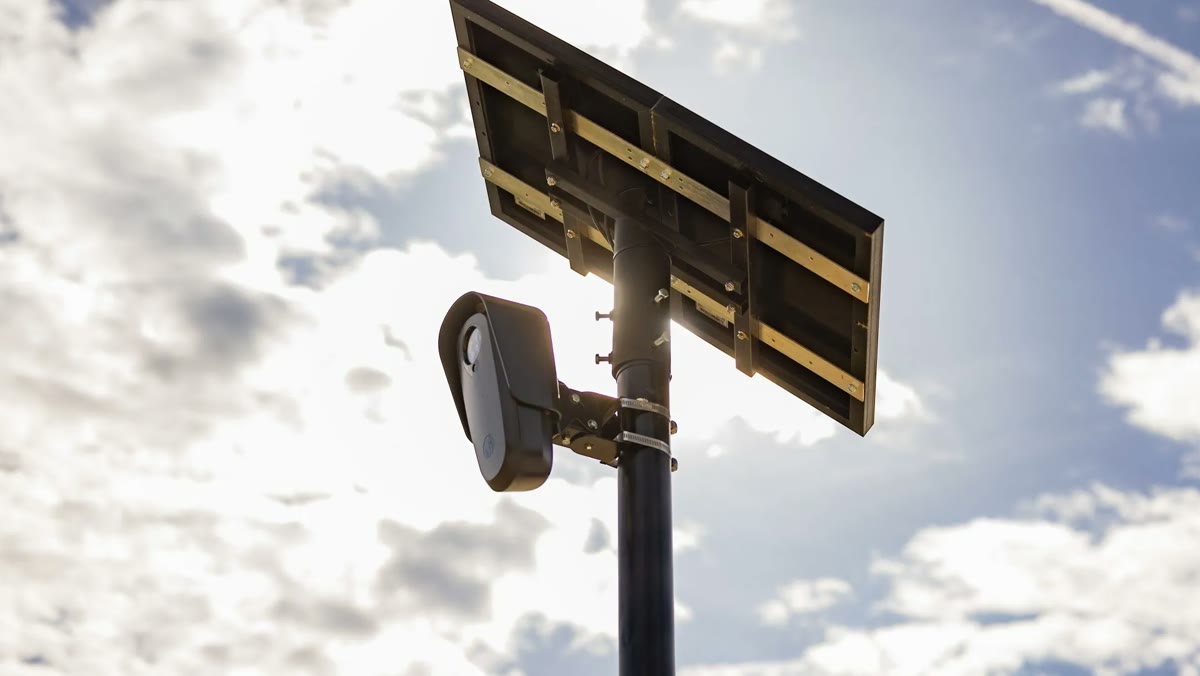
Milton has paid Flock Safety $341,235.62 for license plate cameras. That is 22 payments, from October 2020, where our copy of the city checkbook begins, through this past May.
The contracts are coming up for renewal. Which makes this a good week to ask a question almost nobody asks about these cameras: what do they actually record, and what happens to it afterward?
They record considerably more than a license plate.
Flock's own product materials describe something the company calls a Vehicle Fingerprint. Along with your plate number and state, the system logs your vehicle's color, make, model and body style, and distinguishing features such as roof racks, bumper stickers, dents and aftermarket wheels. It logs the direction you were traveling, the time, and the location. Investigators can search on any of that, not only the plate.
They do not record faces. Flock says its cameras identify vehicles rather than people and that it does not use facial recognition. That is worth stating plainly, because it cuts in both directions. It limits what the system can learn about you. It also means a camera hit places a car somewhere at a given moment. It does not establish who was driving it.
How long is it kept? Flock's published default has been 30 days, and the company has said it is moving to a shorter window. But retention is a setting the customer agency chooses. We do not know what Milton's is set to. We have asked.
Who else can look at it? This is the question that has driven cancellations in other cities. Flock says sharing is controlled by the agency, not the company. It removed federal agencies from its statewide and national lookup networks in August 2025, and this January it added a switch letting an agency turn federal sharing off entirely. Agencies can still share directly with one another where the local agency permits it.
Every one of those is a local setting. Which agencies can search Milton's cameras. Whether federal sharing is on or off. How long a record of your car lives on a server. We have put those questions to the police department and asked for answers by Friday. We will print what comes back.
Some of this came up at Tuesday's Council meeting.
A resident, Lindsay DeFranco, used public comment to present records she had obtained about the city's Flock contracts and payments. DeFranco is a candidate for state representative. She told Council the system had grown from 10 cameras to at least 27, and that Flock-related payments had passed $227,000 by the end of 2025. Our own review of the city's published checkbook produces essentially the same figure for that period. The total has since risen to the $341,235.62 above.
Later in the meeting, Councilmember Carol Cookerly disputed the accuracy of that presentation from the dais, calling it “incredibly sophomoric” and referring to “the lies at the podium.” She defended the cameras as a major tool for solving crimes. She pointed to a California arson case. That case is real. A man was convicted last year of setting San Bernardino County's Line fire, which burned roughly 44,000 acres and injured six firefighters, and he was identified through a license plate reader.
In her remarks, Cookerly also referred to people running for office going down this path. We have asked her which statements she believes were inaccurate, and we will print her answer.
Which leaves one question we could not answer ourselves.
Milton invites residents to speak at public comment, and comment closes before the rest of the meeting goes forward. A resident whose remarks are discussed later in that same meeting has no further turn at the microphone. We have asked the city what its rules provide in that situation, and whether a resident has any channel to respond on the record. We do not have the answer yet.
You can listen to both yourself. The city posts video of every Council meeting. Ms. DeFranco's comment begins at 31:14. Councilmember Cookerly's response begins at 2:09:05 and runs about four minutes. We would rather you hear them than take our summary for it.
Sources: the City of Milton's published checkbook, Flock Safety's product and policy documentation, and the city's own video of the September 9 Council meeting.
The Roundabout
Get the next Camera Files report in your inbox
The Roundabout is free and Milton-only, Tuesday, Thursday and Sunday at 7 a.m. What our records requests turn up runs here.
Already a subscriber? Use the same email and we'll recognize you. We never sell your address.