How Crabapple became Milton's front porch
There's been a Milton on this land for 169 years.
Not the city — the county. The Georgia legislature carved Milton County out of Cherokee, Forsyth, and Cobb in 1857 and made Alpharetta its seat. It ran for seventy-five years before the Great Depression killed its tax base and the legislature folded it into Fulton in 1932. Look at a map of Fulton today and you'll see the bulge at the top — the ghost of Milton County.
Crabapple — the village — was founded in the middle of that. In 1874, settlers built a log cabin schoolhouse beside an old crabapple tree and named the community after the tree. By 1885 there was an organized baseball team called the Moss Back Nine. By 1900 the five-way crossroads was anchored by John Broadwell's brick dry-goods store — handmade bricks, sun-dried by a local creek, still standing and still in use today. The Reese House (Queen Anne, wraparound porch) went up in 1906.
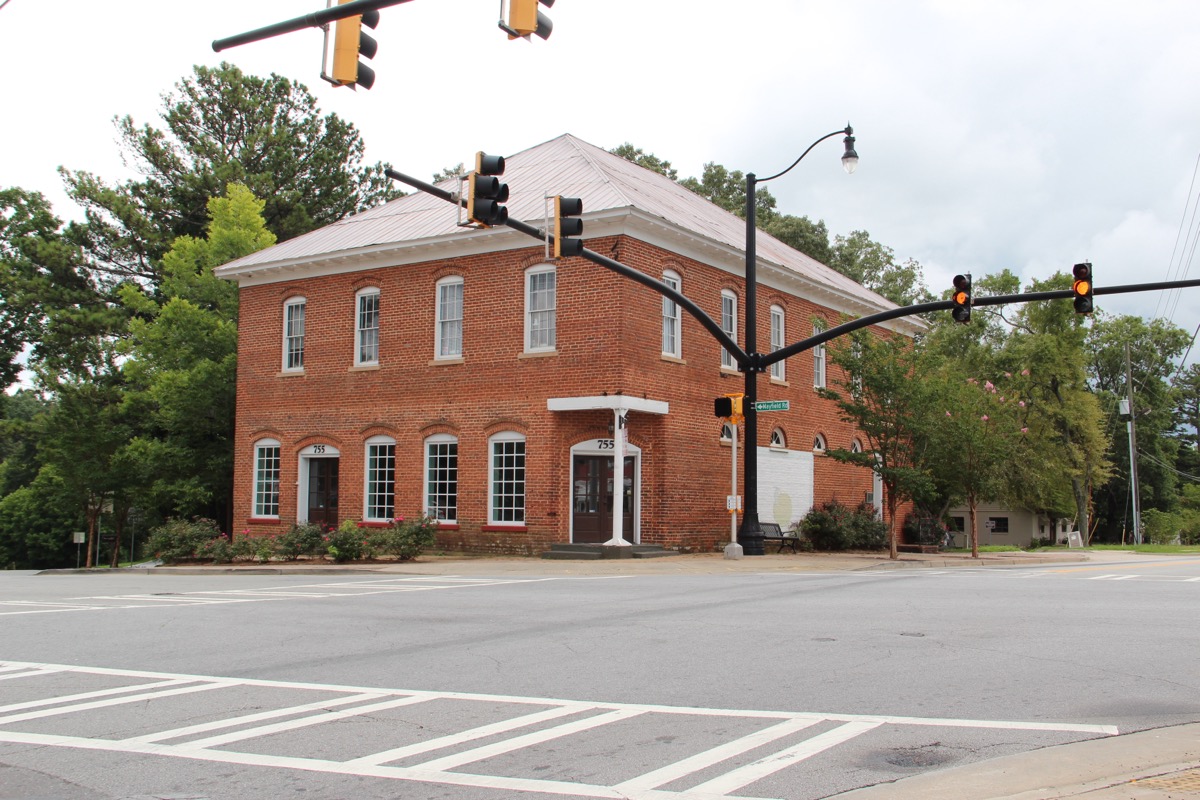
John Broadwell's brick store, downtown Crabapple. Built circa 1900 with handmade bricks sun-dried by a local creek. Still standing, still in use. Photo: Wikimedia Commons (public domain).
So when north Fulton residents voted in 2006 to incorporate the modern City of Milton — partly to draw a hard line around the rural character that Alpharetta and Roswell were already losing — the new city wasn't inventing a relationship with Crabapple. It was reviving one. The village was 132 years older than the new city itself.
That's the trick most growing suburbs miss. A city built around large-lot residential, AG-1 zoning, and horse country still needs somewhere for public life — sidewalks, restaurants, a Thursday-night feel, a place where people on long driveways actually run into each other. Manufacturing that from a soybean field almost never works.
Milton skipped that. It found the existing village and concentrated.
The structural play. The city adopted the Crabapple Form Based Code, which lets the village range from rural at the edges to higher-density mixed-use at the core. The 2040 Comp Plan calls Crabapple "the highest concentration of historic resources of any Character Area in Milton." That's not flattery. It's the bargain the city made out loud: concentrate the density here so the rest of Milton can stay what it is.
City Hall sits there now. Milton Public Library is there. Three schools cluster nearby. Restaurants, the new roundabouts — all knitted around the same crossroads where Broadwell's brick building has been doing business since 1900.
Why fights about Crabapple feel bigger than the parcels. A building in Crabapple is rarely just a building. It's a referendum on what the city is concentrating, where, and how high. The debates aren't random — they happen because Crabapple is doing a job no other part of Milton can do without breaking the rest of the deal. Every parcel in the village carries more structural weight than ten acres of AG-1.
It works because Crabapple was already there. Settlers built it in 1874. Broadwell built it in brick by 1900. The Reese family put a wraparound porch on it in 1906. The 2006 City of Milton just inherited the front porch and built a Form Based Code around it.
One more thing. Crabapple's been producing characters worth knowing for as long as it's existed.
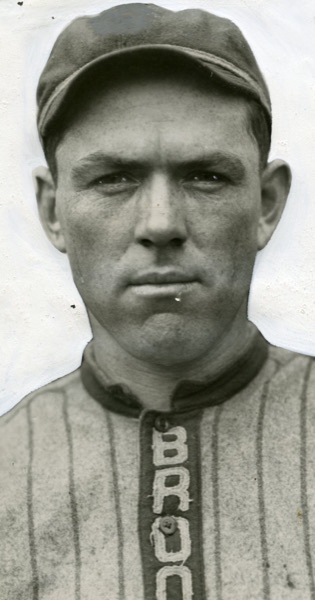
Nap Rucker, 1913. Photo: Library of Congress (public domain).
George N. "Nap" Rucker — born in Crabapple — pitched left-handed for the Brooklyn Dodgers from 1907 to 1916. On September 5, 1908, he threw the first left-handed no-hitter in Dodger history. His nephew Johnny — the "Crabapple Comet" — played center field for the New York Giants and made the cover of Life Magazine on April 1, 1940. The Moss Back Nine, Crabapple's first organized team, dates to 1885.
Front porches matter most in houses that don't have many other places to gather. Crabapple's been gathering people for 150 years. Milton just had the good sense to recognize what was already working.
Sources: Milton Historical Society — Robert Meyers, "The History of Crabapple, Georgia," Our Milton Neighbor (May 2021); City of Milton 2040 Comprehensive Plan; Crabapple Form Based Code; Crabapple, Georgia (Wikipedia).
This story ran in Issue #14. The Roundabout publishes three mornings a week, free, Milton-only, and the next one can be in your inbox.